






10+ fun and surprising facts about France
France is about more than just baguettes, the Mona Lisa, and the Eiffel Tower. The French also have croissants! But look past the tourist hotspots and pastry-related clichés, and you’ll find a fascinating and diverse country with a rich culture and history. We’re barely scratching the surface here, but let’s look at just a few of the things that make France unique.
Table of Contents
- What is France most known for?
- 10 fun facts about France
- 1. Paris has no stop signs
- 2. The French invented the hot air balloon
- 3. The Louvre was originally a fortress
- 4. Carcassonne is Europe’s largest walled city
- 5. The tallest French mountain changes height each year
- 6. The world’s first department store was in Paris
- 7. Sunken D-Day relics can still be found off the coast of Normandy
- 8. The narrowest street in France is just 180 cm wide
- 9. There’s a French town famous for sending cats to sea
- 10. A Paris patisserie is older than the US
- What are some fun facts about Christmas in France?
- What are some interesting facts about food in France?
- What are some surprising facts about the Eiffel Tower?
- Essential travel tips for exploring France
What is France most known for?
France is known as one of Europe’s cultural and artistic hubs — a place filled with incredible food, fashion, painting, music, and history. Let’s take a quick look at some of the things that put France in a league of its own.
Cuisine. Whether we’re talking about escargots de Bourgogne, moules marinières, ratatouille, or its 1,000 (and counting) varieties of cheese, one thing is true — France has an incredibly varied cuisine. The country’s national dishes have come to define the global template for fine dining, from Parisian patisseries to the farm-to-table bistros of Provence.
Fashion. Paris has been the world’s fashion capital for over two centuries. Chanel, Dior, and Louis Vuitton were all founded here, and Paris Fashion Week remains one of the most influential events in the global style calendar. French fashion designers have reshaped standards of style across multiple generations, and will probably continue to do so for a long time to come.
Art and culture. France offers the world a dizzying concentration of cultural output. Monet, Degas, Matisse, and Braque all called it home, as did writers like Victor Hugo, Marcel Proust, and Simone de Beauvoir. French filmmakers ushered in cinema with the world’s first movie screening in 1895, pioneered the avant-garde movement, and established the Cannes Film Festival.
Landmarks. France’s physical landmarks span engineering marvels, royal palaces, world-class museums, and natural wonders like Mont Blanc. Few countries can match the sheer density of iconic sites, especially in Paris, where the Louvre, the Eiffel Tower, and the magnificently restored Notre-Dame Cathedral can all be visited in a single day.
Language and influence. French was the dominant language of diplomacy and culture for centuries, and its fingerprints are visible everywhere from international law to English vocabulary. France remains one of the most culturally exported nations on earth.
10 fun facts about France
You probably already know a few facts about France — that it’s in the European Union, for example, or that it’s home to the world’s biggest cycling event, the Tour de France. Today, let’s get off the beaten cycle path and look at some interesting French facts that you might not already know.
1. Paris has no stop signs
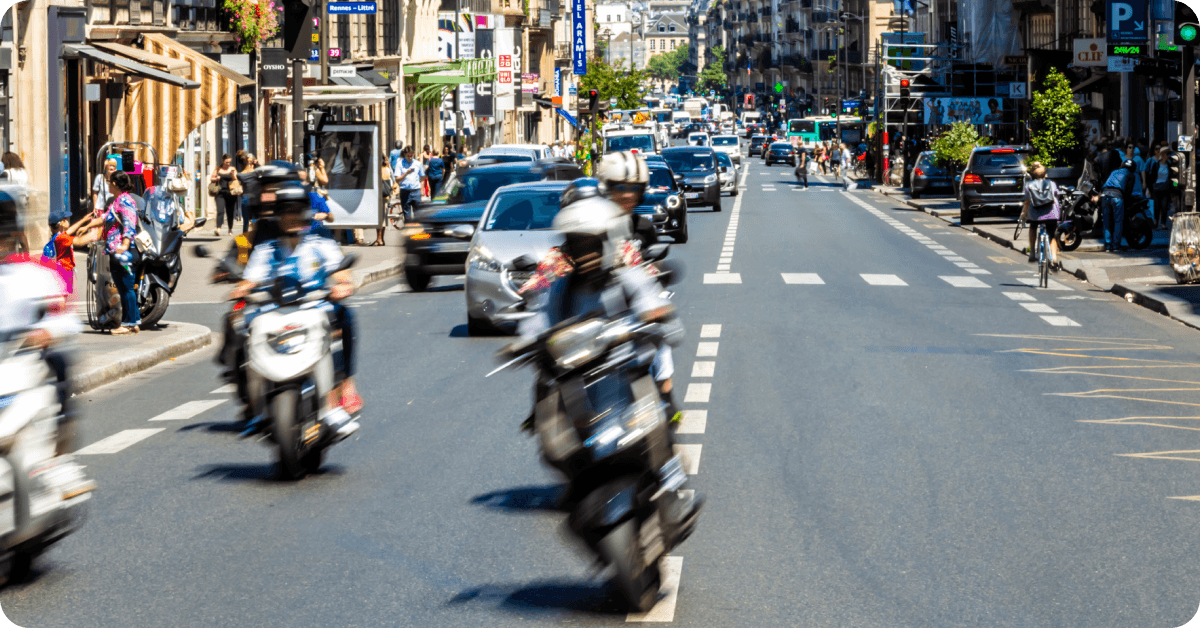
France’s capital, Paris, has a population of around 2 million people, and traffic in the city is notoriously chaotic (a chaos that is only compounded by the fact that French 14-year-olds can legally drive those tiny Ami cars without a full license). For many years, you could only find one officially recognised stop sign in the whole city, located in the 16th arrondissement. As of 2026, however, even that sign is now gone. The rest of Paris relies on traffic lights, roundabouts, right-of-way rules, and lots of yelling through rolled-down windows.
2. The French invented the hot air balloon
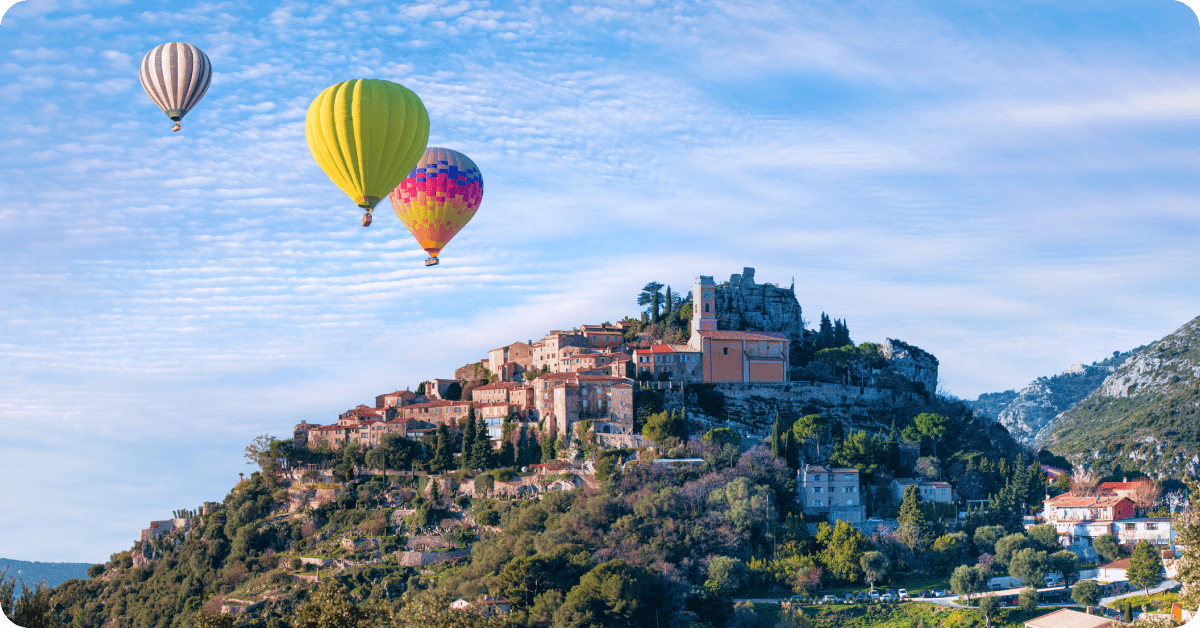
Well, two Frenchmen in particular — a pair of brothers from the Ardèche region invented the hot air balloon. Joseph and Étienne Montgolfier began experimenting with an innovative new form of travel in 1782. By lighting wool and damp straw, they created billowing waves of heat that could elevate pieces of fabric — the genesis of the hot air balloon. You’ll see these charmingly coloured oddities all over Europe and beyond, but remember, they first took flight in France!
3. The Louvre was originally a fortress
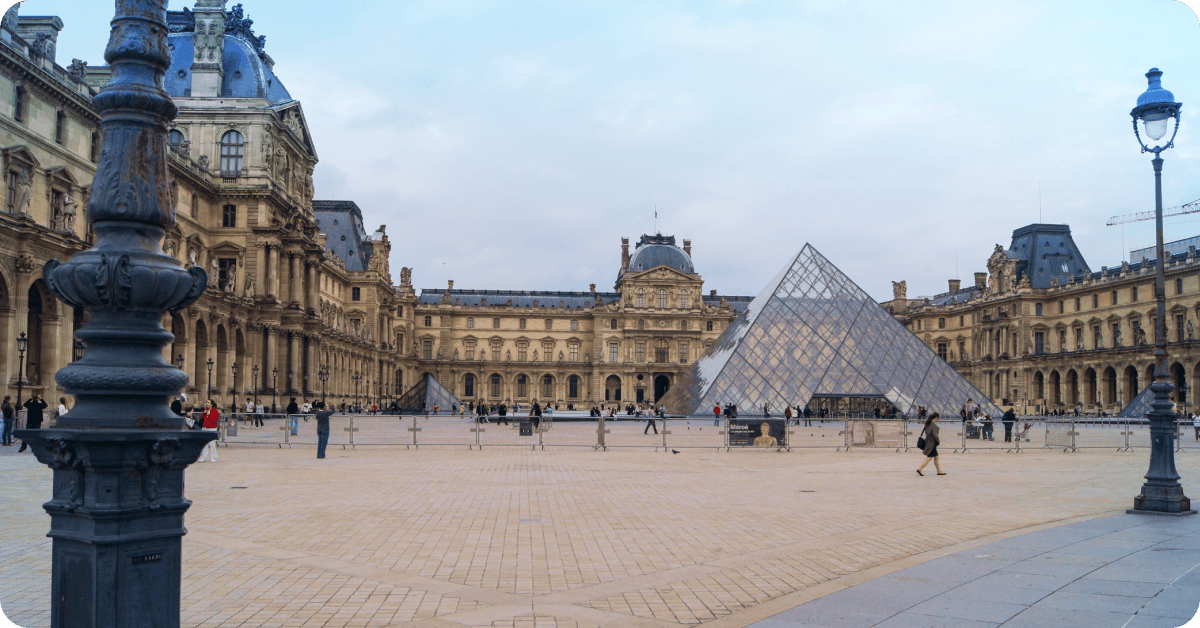
Today, the Louvre is where you wait in a long line to take a photo of a tiny portrait of the wife of a Florentine merchant (AKA the Mona Lisa) — humans are kind of odd, right? The museum wasn’t always dedicated to art, though. In the 12th century, King Philip II ordered the construction of a fortress to defend Paris from Viking raiders sailing up the Seine. Initially a functional military structure, it was then redeveloped by King Francis I to become the grand, palatial structure we know today. After the French Revolution, the Louvre was overhauled as a public museum in 1793.
4. Carcassonne is Europe’s largest walled city
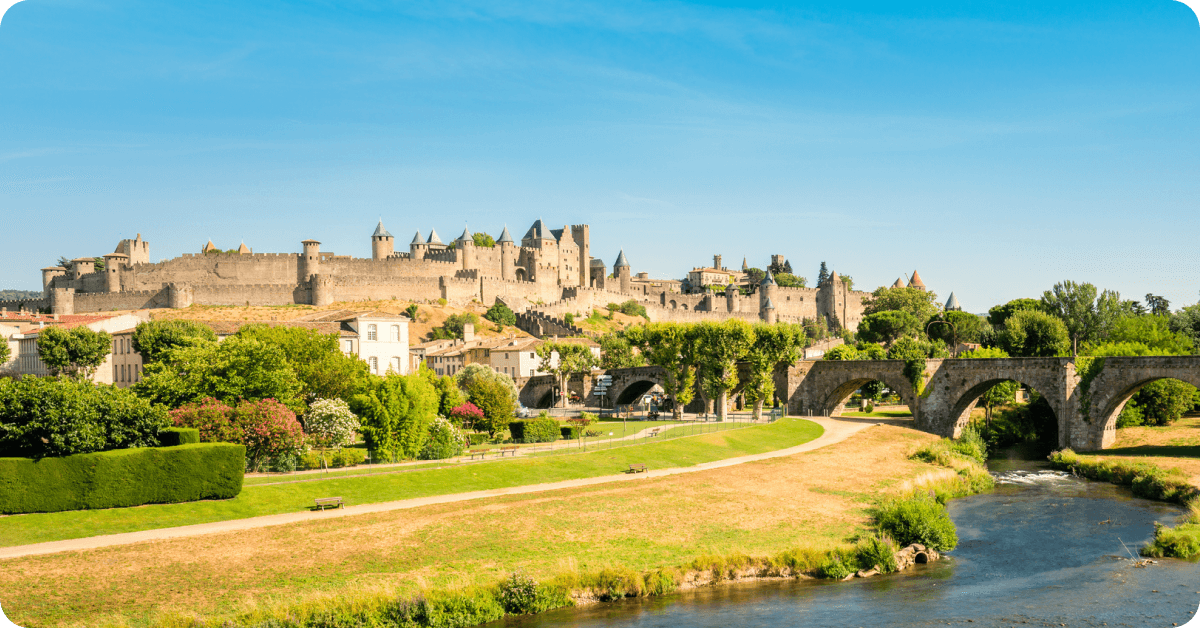
Some historians argue that France invented the medieval Western castle, with Norman architects throwing up massive fortified structures across the country during the 11th century. In this era, towns were also built with new defensive walls, creating citadels that could withstand major sieges. Carcassonne is the largest surviving walled city in Europe, surrounded by 3 kilometres of ramparts and 52 towers. From outside, the city looks like something ripped directly from the pages of Lord of the Rings or Game of Thrones — an incredible relic from France’s warlike past.
5. The tallest French mountain changes height each year
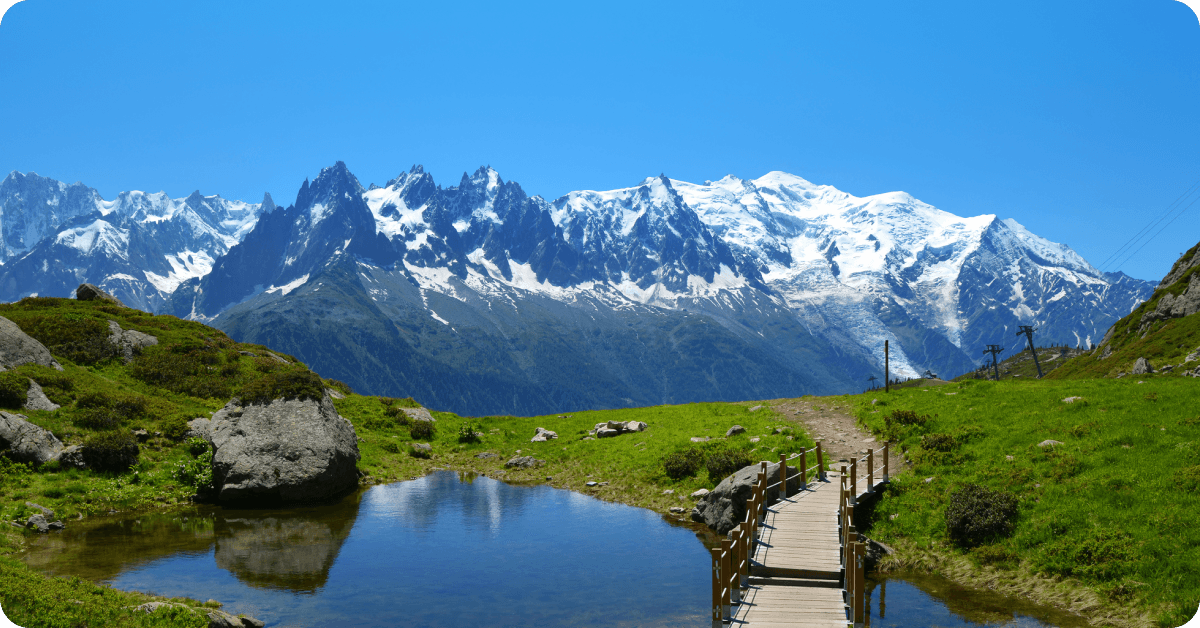
While “moving mountains” may be an overused idiom, one real-world French mountain is kind enough to move itself. Mont Blanc, Western Europe’s tallest peak, changes its size slightly over time, despite having an officially recognized height of 4,807 metres. The change is due to snow accumulation and, more recently, melting. As a result of France’s warming climate, Mont Blanc’s peak is now more than two metres lower than it was in 2021.
6. The world’s first department store was in Paris

Before the age of giant online retailers, glamorous department stores offered the ultimate shopping experience. The first store of this kind opened in Paris in 1852 — Le Bon Marché (“The Good Market,” in English). It wasn’t just the scale and glitz of the place that made waves in French society, either. Le Bon Marché changed the game with fixed prices, seasonal sales, and (perhaps foreshadowing the future of retail) home delivery. They might not have been attaching Parisian hatboxes to drones, but they were ahead of their time.
7. Sunken D-Day relics can still be found off the coast of Normandy
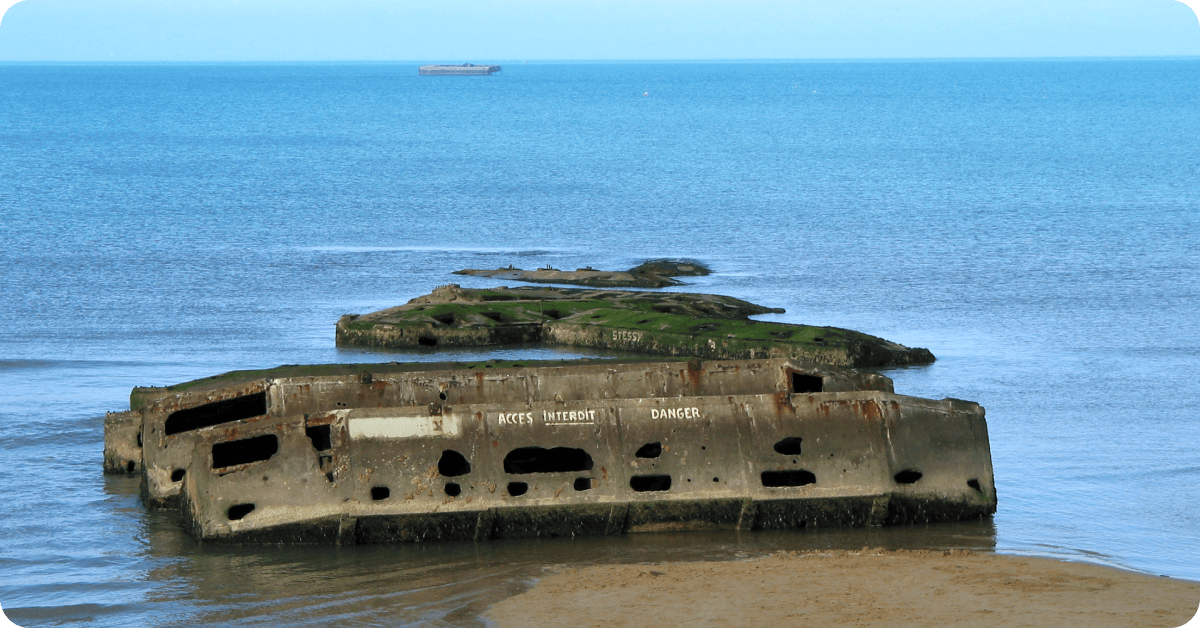
If you’re a history buff, a must-visit location is the commune of Arromanches-les-Bains in Normandy. Today, it’s a beautiful coastal town, perfect for catching the summer sun. It wasn’t always so peaceful, though. In 1944, Allied forces landed on the beaches of Normandy and set up Mulberry harbours — temporary floating jetties where troop carriers and supply ships could dock. You can still see these structures at Arromanches-les-Bains, and when the tide is low, rusted armored vehicles and other military equipment appear far out on the sand, an eerie reminder of the battles fought here during World War II.
8. The narrowest street in France is just 180 cm wide
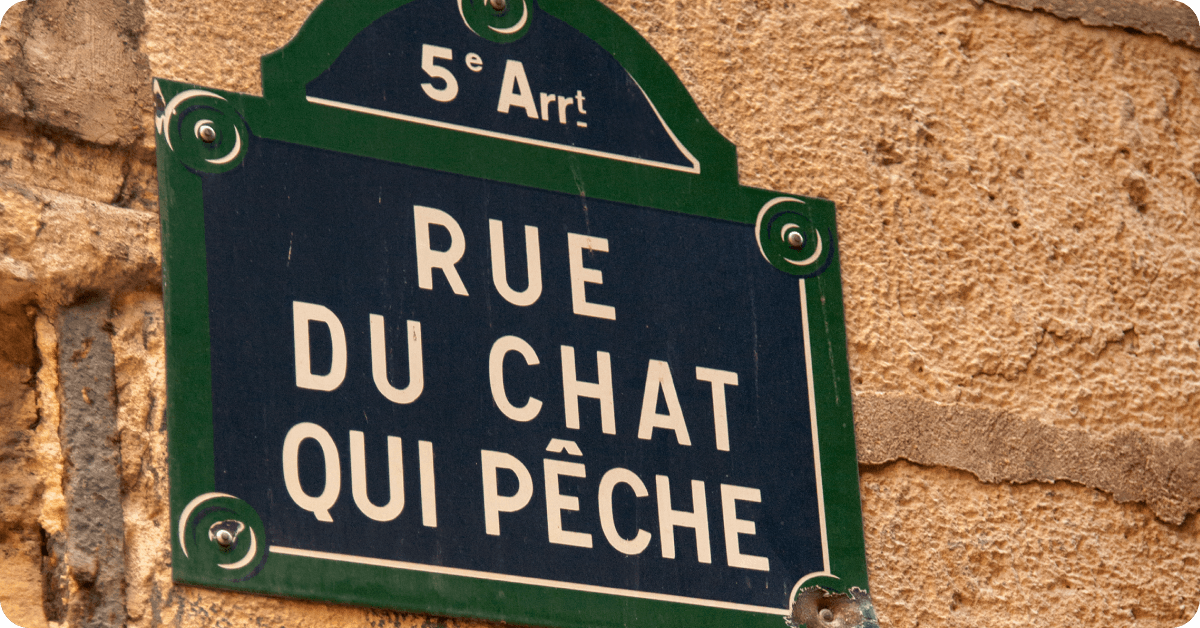
The French are known for driving some very small cars, but even they might struggle to drive the length of Rue du Chat-qui-Pêche, France’s narrowest street. Located in the capital’s 5th arrondissement, the 180 cm aperture between two buildings looks more like a lane or back alley, despite holding official street status. Worried about fitting through? Well, you can always ditch the car and embrace the real Parisian experience — riding a moped!
9. There’s a French town famous for sending cats to sea
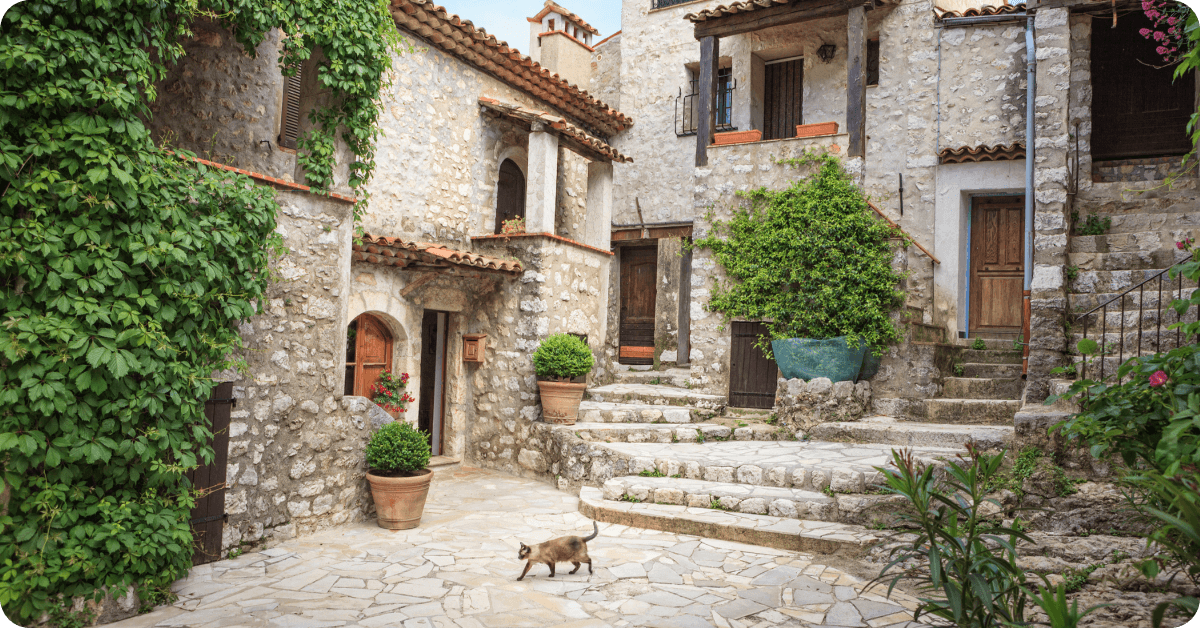
Returning to the northern coast of France, the town of Dunkirk is steeped in history. You’ve probably already heard about its role in WW2 (if not, Christopher Nolan can fill you in), but a lesser-known fact is the town’s connection to cats. Dunkirk sailors in the 1700s and 1800s used to ceremoniously bring a cat aboard each ship, with the animals often being found in and carried off from the local fish market. The feline shipmates helped to keep down vermin on the ships, but were also thought to bring good luck — more cats means fewer rats, and fewer rats usually leads to a reduction in the number of dangerous diseases circulating.
10. A Paris patisserie is older than the US
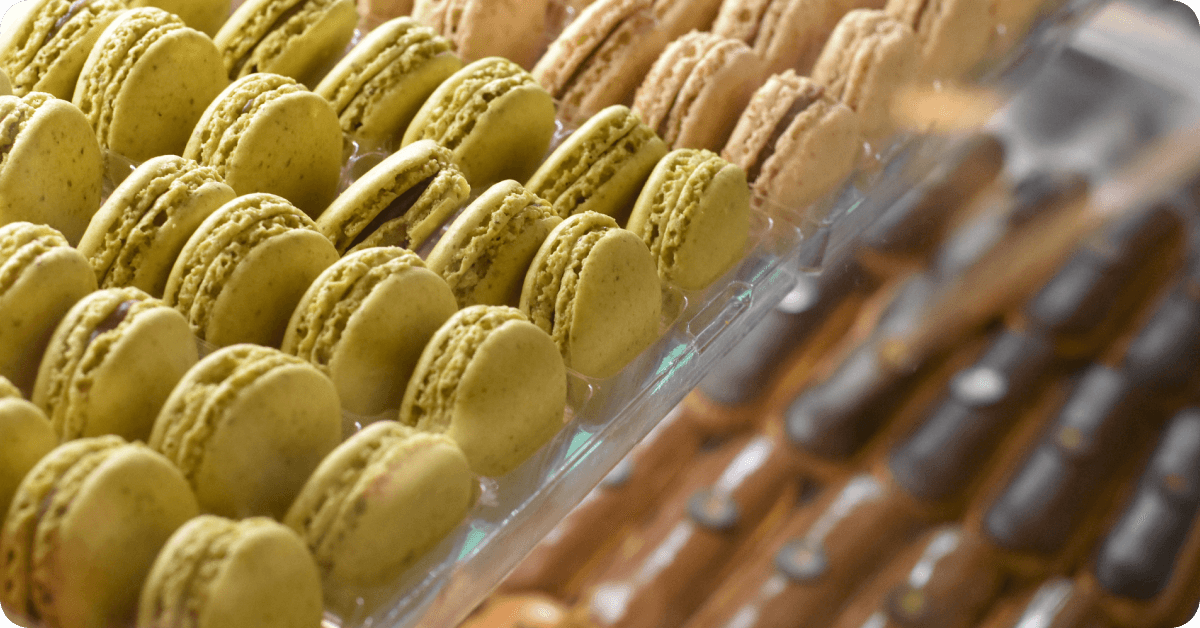
Established in 1730, Stohrer is a French institution. The patisserie was founded in Paris by Nicolas Stohrer, the personal pastry chef of King Louis XV, and it still stands in Paris’s rue Montorgueil. Every pastry, savory and sweet, is prepared in-house, and to this day the business still sells delicacies invented by Nicolas Stohrer himself — rum babas and vol-au-vents, for example. Stohrer is only 46 years older than the US, but that was all the time France needed to get ahead in the pastry game.

Stay connected with the Saily eSIM app
Affordable mobile data plans for every journey.
What are some fun facts about Christmas in France?
You should try to spend at least one Christmas in France. Centuries-old festive traditions, spectacular Christmas markets, Paris streets in the snow — what’s not to love? Here are a few things that might surprise you about the French holiday season.
The French have their own version of Santa. Rather than Santa Claus, many French children grow up with Père Noël — a tall, red-robed figure who delivers gifts on Christmas Eve. In the Alsace region, he’s often accompanied by his stern sidekick, Hans Trapp, a scarecrow-like figure whose job is to terrify children who misbehave into getting their act together. Nothing says joyeux Noël like a threatening scarecrow!
The Christmas tree tradition was born in France (sort of). The first documented decorated Christmas tree is widely believed to have appeared in Strasbourg in 1605, when the city was still part of the Holy Roman Empire. Germany often gets credit for the tradition, but since Strasbourg is now counted as a part of France, we think this can still be chalked up as a win for the French.
The Yule log isn’t just a dessert in France. The iconic bûche de Noël — a chocolate sponge rolled and decorated to resemble a log — has its roots in a very real tradition. French families once burned an actual log on Christmas Eve, believing the ash would protect the household from evil throughout the year. The cake version is considerably tastier and far less of a fire hazard.
The French celebrate on Christmas Eve, not Christmas Day. The main event in France is le réveillon, a lavish late-night feast on Christmas Eve that can stretch well past midnight. Foie gras, oysters, roasted meats, and bûche de Noël are all on the table — it’s essentially a formal banquet that starts after midnight mass and ends when everyone agrees to stop eating, which in France can take a while.
Strasbourg has hosted one of the best Christmas markets in Europe for over 450 years. Dating back to 1570, Strasbourg’s Christkindelsmärik is the oldest Christmas market in France and one of the oldest in Europe, drawing close to two million visitors every year. The nearby city of Colmar also regularly ranks among the top markets on the continent, making the Alsace region the undisputed festive capital of France — and a strong contender for the title across Europe as a whole.
What are some interesting facts about food in France?
French food is eaten in every corner of the world, and most of us know at least a thing or two about this cuisine (snails!). But the country that gave us the restaurant, the toque, and the concept of the three-course meal still has a few surprises up its sleeve. Here are some food facts that go beyond the noble baguette.
France has more cheese varieties than days in the year. With over 1,000 distinct types of cheese — from the creamy, cave-aged Roquefort to the pungent, washed-rind Époisses — France takes its fromage very, very seriously. Charles de Gaulle famously wondered how anyone could govern a country with so many cheeses. Well, the jury might still be out on that one, Charles, but the cheese is as good as ever.
The French invented the restaurant as we know it. The word “restaurant” is itself French, derived from the restorative broths once sold on Parisian streets in the 18th century. The first true restaurant — where guests could sit, choose from a menu, and eat at individual tables — opened in Paris around 1765.
French bread is protected by law. A 1993 decree known as the Décret Pain dictates exactly what can legally be called a baguette de tradition française. It must be made on the premises where it’s sold, contain only four ingredients (flour, water, salt, and yeast), and contain no additives or preservatives. The result is a loaf with a shelf life of roughly a few hours — and an unbelievable taste and texture.
The French consume roughly 25,000 tons of snails per year. Escargots de Bourgogne — snails cooked in garlic butter and parsley — is one of France’s most iconic dishes, and the appetite for them is genuinely enormous. In fact, most of the snails consumed in France are actually imported, since domestic production can’t keep up with demand.
Champagne can only come from one place. True Champagne (the sparkling wine synonymous with celebrations worldwide) can only be produced in the Champagne region of northeastern France, under strict regulations governing everything from the grape varieties used to the secondary fermentation process. Sparkling wine made anywhere else, no matter how good, is simply not Champagne.
French cuisine is UNESCO-protected. In 2010, the traditional French repas gastronomique — the traditional multi-course French meal — was added to UNESCO’s list of Intangible Cultural Heritage. It’s one of the few food cultures in the world to receive this distinction, recognising not just what the French eat, but the rituals, conversation, and conviviality that surround the table.
What are some surprising facts about the Eiffel Tower?
More than 130 years after it first pierced the Parisian skyline, the Eiffel Tower remains the world’s most visited paid monument. But beneath the postcard image lies a genuinely strange and surprising history. Here are some facts that might change the way you look at Paris’s Iron Lady.
Paris almost didn’t get it. Gustave Eiffel originally submitted his design to Barcelona, but the city rejected it for aesthetic reasons. Paris was the second choice — and given that the tower is now estimated to be worth over 400 billion euros, Spain has had a long time to think about that decision.
It was never meant to be permanent. The Eiffel Tower was only intended to last 20 years. It was saved by the scientific experiments Eiffel encouraged, and in particular by early radio transmissions, which made it militarily and strategically too useful to tear down — a lucky escape for one of the world’s most beloved landmarks.
Parisians originally hated it. Responses to the plans for the 300-metre structure were far from unanimously favourable — newspapers doubted its structural integrity, and residents of the surrounding district were so frightened the tower might fall on them that they sued the French State. Writer Guy de Maupassant despised it so much that he regularly ate lunch in the tower’s first-floor restaurant, as it was the only place in Paris where he could eat without having to look at it.
It played a secret role in both World Wars. During World War I, the French military used the tower’s radio and telegraph centre to communicate with troops and intercept enemy messages — including one that led to the capture of the notorious spy Mata Hari. In World War II, when German forces occupied Paris, French fighters cut the lift cables so that any Nazi soldiers wanting to reach the top would have to climb the stairs themselves.
It grows in the summer. Due to thermal expansion, the Eiffel Tower can grow up to 6 inches taller on warm days and lean several inches away from the sun, before shrinking down in the cold.
It gets a fresh coat of paint every seven years (by hand). It takes around 50 painters and 60 tons of paint to coat the entire structure, and the tower has been repainted 19 times since it was built — most recently in a golden finish ahead of the 2024 Paris Olympics. The official colour since 1968 has been the evocatively named “Eiffel Tower Brown.”
Gustave Eiffel had a secret apartment at the top. Eiffel built himself a small private apartment on the top level of the structure, complete with plush rugs, oil paintings, and a grand piano. Only a handful of VIPs were ever invited up, including Thomas Edison. The apartment sat largely forgotten until it opened for public viewing in 2015 — proof that the best real estate in Paris has always had a view.
Essential travel tips for exploring France
Hopefully, some of these fun facts have got you planning a few unusual stops on your French adventure. To help you make the most of your trip, remember these useful travel tips, from staying on the right side of the locals to making sure your phone works in France!
Learn key local phrases. In rural areas, a few words of French will give you an edge. The stereotype that the French don’t like it when foreigners try to speak their language is pretty inaccurate and is based largely on the anecdotal experience of tourists in Paris. Even in the cities, where English is widely spoken, knowing the names of key public transport elements, like the French railway network (referred to as the SNCF), can really help. Plus, people appreciate the effort!
Remember regional customs. France has its own customs and traditions, distinct from those of other European nations. Many things you might expect to be polite are actually the opposite in France — guests don’t bring wine to parties or dinners (in case their offering clashes with the tastes of the host), and it’s expected that you’ll arrive at least ten minutes late. Read up on French etiquette to help you blend in and avoid stepping on any French toes.
Plan for shop closures. Many businesses, especially in small towns, close between 12:00 PM and 2:00 PM. In summer, this is particularly prevalent because across southern France (in places like the French Riviera), the heat can become very intense. Try to use these moments of stillness as opportunities to enjoy a nap yourself, or to explore areas of the towns and cities you’re in that would otherwise be overly busy.
Use public transport passes. Instead of buying individual tickets, the most cost-effective option on French public transport is to buy a pass that covers unlimited journeys in multiple areas. In Paris, for example, you should consider buying a Paris Visite pass. Covering the metro, RER, bus, tram, and Montmartre funicular, the pass can be purchased for one, two, three, or five days at a time. You can also choose whether to get a pass for zones 1-3 (central Paris and inner suburbs) or zones 1-5 (including airports and further destinations).
Stay connected with an eSIM. The easiest way to get online in France as a tourist is to use an eSIM app like Saily. Convenience and affordability are just some of the benefits of an eSIM. With an eSIM for France, you can scroll without worrying about sky-high roaming fees, while also enjoying Saily’s enhanced security features and ad blocking.
Wherever you’re going, getting secure, reliable internet should always be on your international travel checklist. Before you travel, download your eSIM and activate your plan — the moment you land in France, your device can connect to local mobile networks. From ski resorts in the French Alps to the sunny streets of Nice, Saily’s data plans make internet access easy.
Need data in France? Get an eSIM!

1 GB
7 days
US$3.99
3 GB
30 days
US$8.99
5 GB
30 days
US$11.99


Related articles
